Seattle
East of the MountainsSeattle is the city in which Ben Givens spent his adult years, built a distinguished career as a heart surgeon, and remained closely tied to his daughter and grandson. At the novel’s opening, its relentless rain surrounds him on the night before his planned death; by morning, the city becomes the place he leaves behind. Seattle therefore stands both for the life Ben has made and for the family he tries to keep outside the truth of his terminal illness, while his journey east draws him toward the orchards, river country, and hunting grounds connected with his earlier life.
City, Rain, and the Eastern Landscape
On the night Ben has chosen as his last among the living, rain falls over Seattle’s roof tiles and beats against his window. The sound accompanies his insomnia as memories of his wife, his daughter, mountain climbs, bird-hunting canyons, and fruit trees crowd his thoughts. He tries to turn from the past and attend to the rain’s steady cadence, but neither sleep nor relief comes. The city’s weather becomes the immediate setting for his confrontation with dying, while the memories it cannot silence reach far beyond the city.
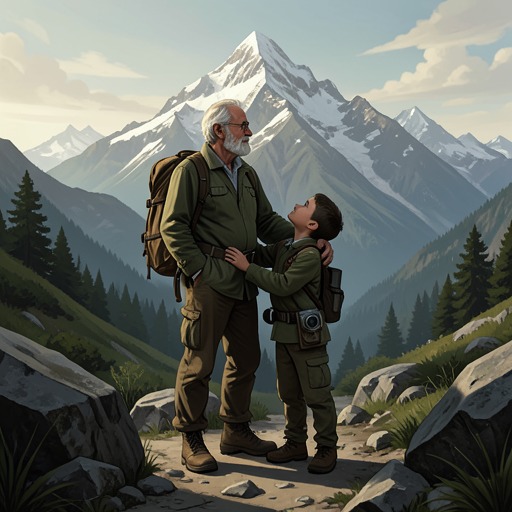
The narration sets Seattle against the land to its east. Across the mountains, October moonlight falls on dry hay fields, vineyards, sage country, and apple orchards; along the Columbia River, where Ben was born, fruit hangs heavily from the trees and windfall apples gather frost. Seattle is the rain-darkened present, whereas the eastern landscape contains the places that formed his memories and the imagined setting for his final hunt. The contrast is not simply between city and country: it separates the life Ben has established from the terrain to which he believes he can retreat.
Family Life and a Concealed Departure
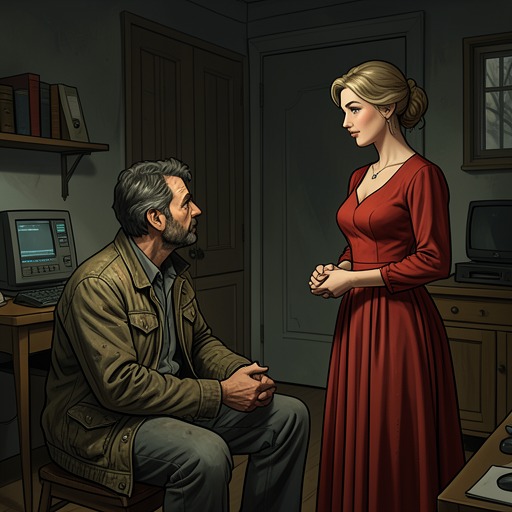
Seattle is also where Ben’s daughter, Renee, lives. The evening before he sets out, he eats dinner with her and his grandson, Chris, performing ordinary family life while concealing both his cancer and his plan. He tells them he will cross the mountains to hunt quail in willow canyons, gives no specific destination, and says he expects to return Thursday, perhaps later if the hunting is good. The deliberately open-ended account is intended to postpone their alarm, leaving the possibility that his family will not look for him for as long as a week.
At the table, Ben attends to the family members whose concern he is trying to forestall. He admires Renee’s quiet presence and asks about her work writing screenplays for children’s films; she modestly turns the conversation toward Chris, now in his third year of medical school and beginning clinical work with patients. Ben also asks after his granddaughter Emma, who has married a man from Wellington, New Zealand, and is rarely in Seattle, and Renee’s husband John, away on business. The details establish the family life gathered around him even as he constructs a lie to keep that family from intervening in his intended death.
The City as Home and Point of Departure
Before leaving, Ben checks that his house appears to belong to a man taking an ordinary hunting trip and expects to return. He arranges objects to preserve that impression, including a bird plucker on the kitchen table, a recipe box opened to quail on toast, and a television recording; he also leaves a copy of Scientific American, a Christmas gift from Renee, beside his bed. He has set the answering machine, lowered the heat, and arranged timers for the living-room and bedroom lamps. A neighbor is to collect the newspapers and mail and take the garbage to the curb. These preparations give his departure the outward shape of a temporary absence from a settled Seattle home.
The house is the home Ben has occupied for forty-three years. Shortly before six on a Saturday morning, he drives away through rain so heavy that the road ahead is barely visible, without looking back. The account lingers on the city’s streets appearing only half formed through the windshield, then follows him east across the floating bridge and past the developed shores of Lake Sammamish. Condominium lights occupy what had once been marsh and cattails; farther along, shops and gas stations mark the suburban edge. As the suburbs fall away and the road climbs above Issaquah Creek, the journey carries him out of the urban world and toward the mountains. Seattle is thus not only a point on his route but the home he deliberately leaves without telling his family why.
Medical Identity and Continuing Ties
Ben’s professional history is also attached to Seattle. When asked where he had practiced, he identifies the city; he later clarifies that he had been a thoracic surgeon. Earlier, the narrative describes him as a retired heart surgeon specializing in bypass operations, admired by other doctors for steadiness, precision, endurance, concentration, and grace. In the operating room, he was especially capable when the work narrowed to the isolated heart and the demanding task of manipulating it. His medical identity gives the city another dimension: Seattle is where his adult life and skilled work belong, even as illness makes his own body increasingly painful and difficult to command.
Leaving Seattle does not sever his connection to it. While staying in Quincy and still pursuing his plan, Ben calls Renee, who is in Seattle working on a screenplay; the call brings the concealed journey back into contact with the family he had tried to shield from it. His later conversation with a woman who says she grew up there gives the city a smaller social echo: he recognizes them both as people from the western side of the state. Seattle recurs, then, as a home and professional center that remains present through family calls and personal histories, even after Ben has crossed the mountains.
Seattle in the Aftermath Ben Imagines
During a painful night away from home, Ben imagines how Renee might reconstruct his disappearance. She could examine his credit-card records, learn that his car had been towed in North Bend and that he had taken a motel room in Quincy, and try to trace what happened to him and the dogs. She might question Ilse Peterson about the attack by the wolfhounds and Tristan’s death, visit the place where Ben became tangled in barbed wire, or seek William Harden’s account. The imagined investigation turns Seattle into the family’s point of departure for understanding the events of his absence: the city is where Renee would begin assembling the evidence and where the truth of her father’s cancer might finally emerge.
This imagined aftermath complicates Ben’s attempt to make his death private. He sets out from Seattle hoping that distance and delay will spare his family the knowledge of his illness, yet he can already picture Renee tracing his route and searching for an explanation. The city consequently holds both sides of his plan: the home and relationships he leaves behind, and the place from which those relationships may eventually follow the evidence east.